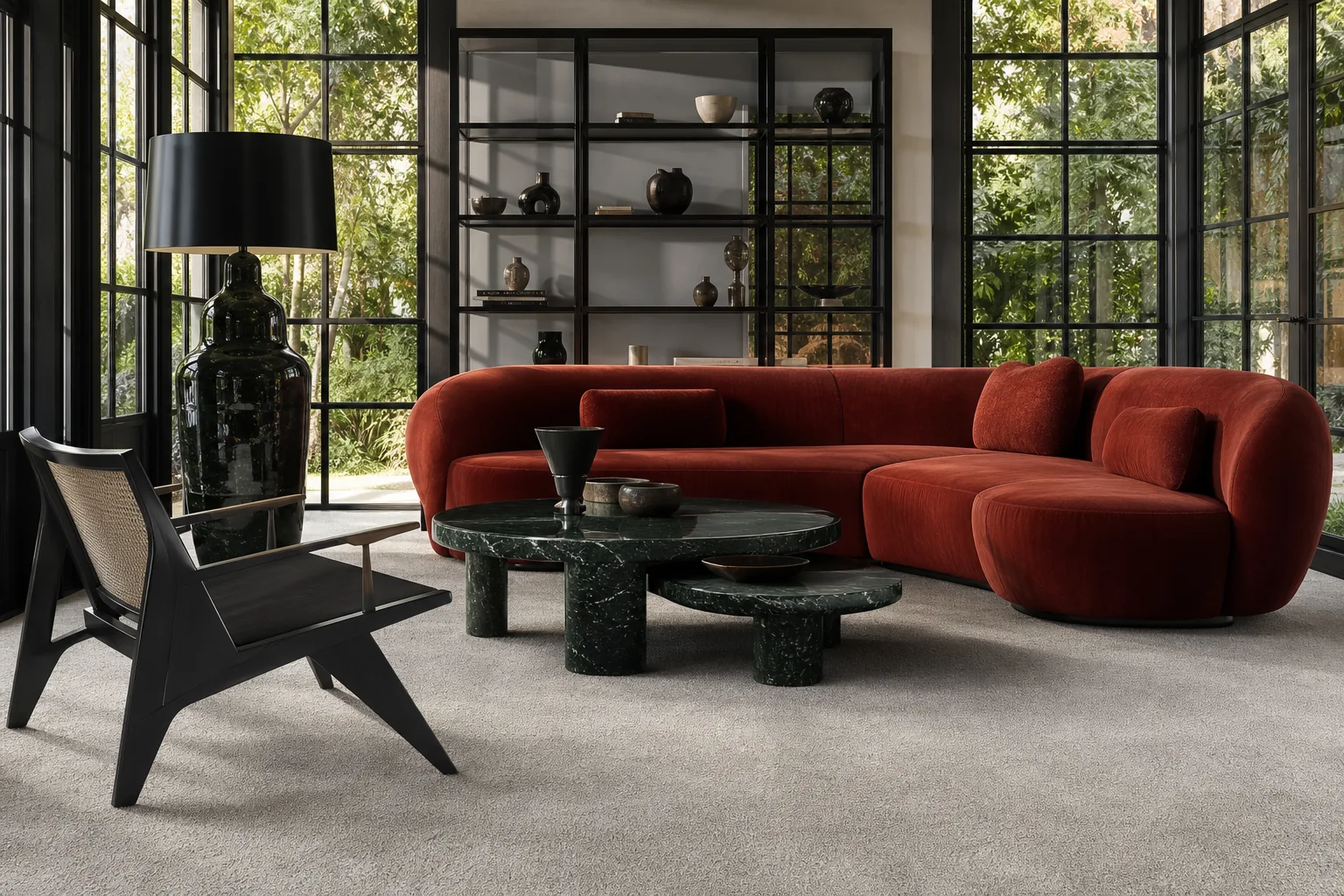
Why sofa and rug pairing matters
A thoughtful search for sofa and rug pairing usually begins with a practical question: pairing a rug with sofas, sectionals, lounge chairs, coffee tables, and real seating clearances. The answer should not come from a trend image alone. It should come from the room’s light, furniture, use, construction details, and the emotional temperature the floor is supposed to create.
Furniture determines whether a rug feels grounded or oddly separate. The correct rug footprint can make a sectional feel architectural, connect two lounge chairs to the sofa, and give the coffee table enough visual weight without blocking circulation. That is why this guide looks at the rug as a design decision with consequences. A rug can make a room feel gathered, generous, intimate, dramatic, calm, or unfinished. The difference often comes down to a few exact choices made early.
Start with the room, not the rug
The best brief begins by naming the room: living rooms, family rooms, libraries, hotel lounges, private salons, and open seating plans. Each room asks something different of a rug. A dining room needs chair movement and edge discipline. A bedroom needs softness at the first step of the day. A hospitality lounge needs atmosphere, durability, and a surface that still looks considered after repeated use.
Before choosing a color or size, map how people enter, sit, stand, and gather. Notice where furniture legs land, where doors swing, where daylight hits, and where the eye naturally stops. This makes the rug part of the architecture instead of a loose decorative object.
The decisions that change the result
Three decisions have the largest effect: decide which furniture legs should sit on the rug, leave clear walking paths around the seating group, and choose a rug color that connects upholstery, floor, and table material. These sound simple, but together they determine whether the rug feels integrated or temporary.
A custom rug should also be judged in real scale. Small samples are useful for color and touch, but they cannot answer every proportion question. A room plan, furniture layout, and sample review should work together so the final rug supports the whole space.
How MAJLIS approaches it
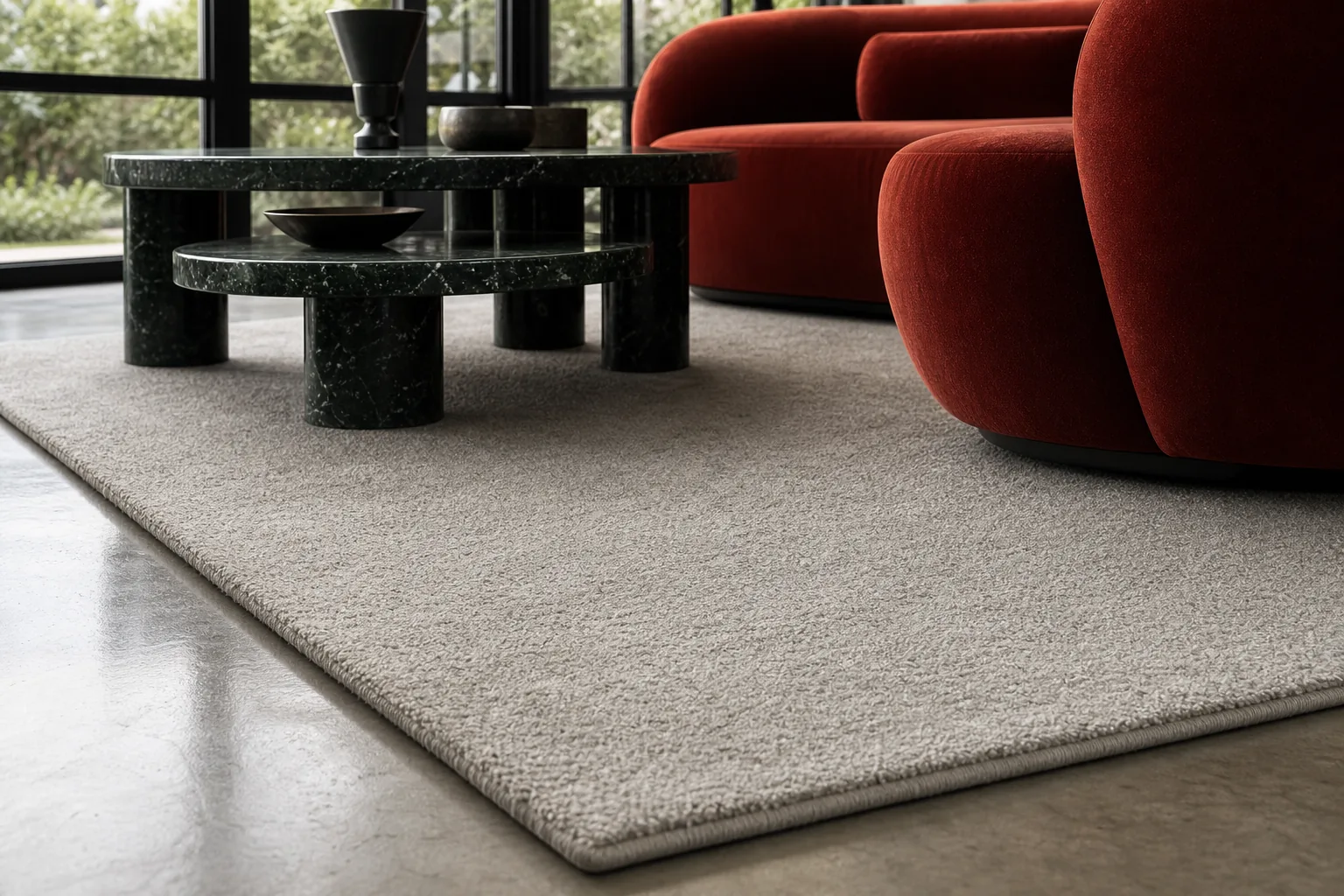
MAJLIS can build the rug around the actual seating plan, so the final field supports the sofa depth, chair angle, coffee table shape, and circulation instead of forcing the room into stock proportions. The point is not to make the rug louder. The point is to make it more exact, more useful, and more connected to the way the room will be lived in.
Because MAJLIS rugs are made to order, scale is not treated as an afterthought. The footprint, shape, color, pile, and edge can be considered before production. That allows a rug to be quiet or bold without becoming generic.
What to confirm before ordering
For homeowners, interior designers, furniture buyers, and hospitality teams planning complete seating areas, the strongest rug decisions are confirmed in layers. Start with the room plan, then color, then material, then final dimensions. If one of those layers changes, revisit the others before ordering.
A helpful approval path is: measure the room, mark the rug footprint, compare samples in place, review edge and pile choices, and confirm how the room will be cleaned and used. This keeps the design beautiful without separating it from daily life.
- Measure the furniture group and circulation path, not only the empty floor.
- Check color in the actual light of the room at more than one time of day.
- Confirm pile, edge, and sample quality before final production.
- Choose a size that makes the room feel held rather than interrupted.
The MAJLIS difference
MAJLIS is built for rooms where a rug has to do more than fill a rectangle. It should define a place to gather, carry color confidently, soften sound, and feel intentional underfoot. That is the difference between buying a rug and designing the floor as part of the room.
The final decision should feel specific rather than forced. When the size, color, surface, and use are aligned, the rug becomes the quiet structure of the room: visible enough to matter, calm enough to live with, and precise enough to feel inevitable.
For SEO and for real design clarity, the most useful content is specific. Name the room, the material, the color family, the shape, and the use case. A visitor searching for a custom rug is usually trying to solve a room problem, not collect decorative language.
MAJLIS uses that same discipline in its editorial language. The rug is discussed as a functional and emotional part of the room: a place for gathering, a color field, an acoustic layer, a tactile surface, and a made-to-order object with practical production decisions behind it.
When comparing options, avoid judging by a single photograph. A rug changes under morning light, artificial light, furniture shadows, and daily traffic. Samples, plans, and measured clearances give a more reliable picture than a screen alone.
Build the rug around the furniture
Send MAJLIS the seating plan so the rug size, shape, and color support the room properly.
More reading: How to Choose the Right Rug Size for Every Room and A Designer Guide to Choosing a Custom Living Room Rug Color.